Building Community in Jonestown
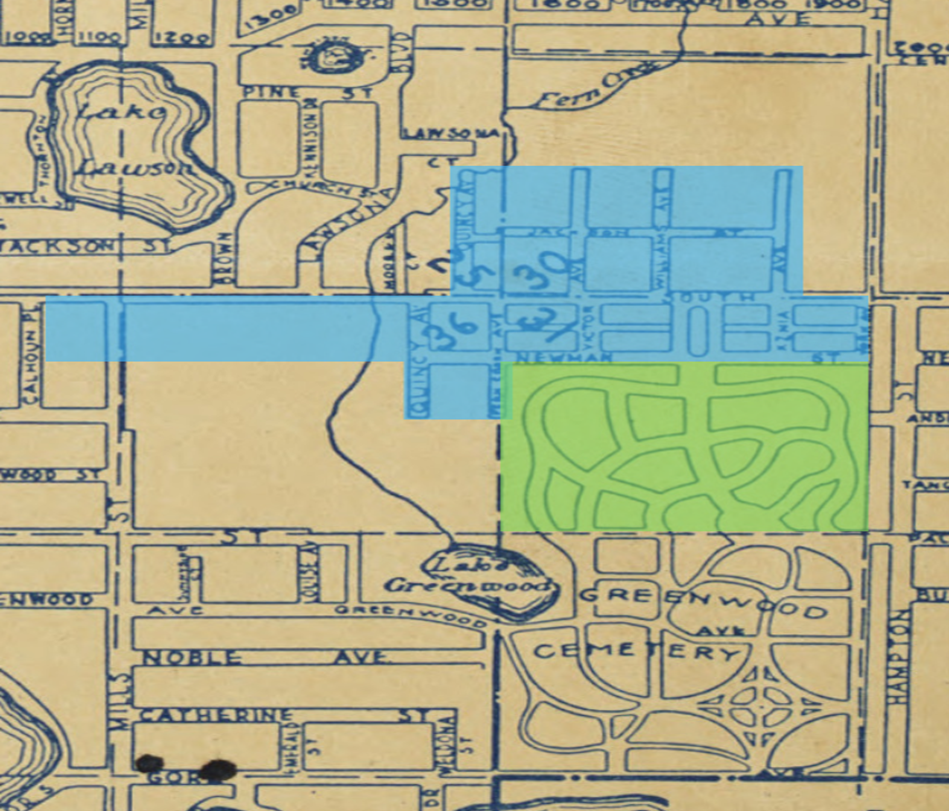
The Jonestown community lived along the banks of Fern Creek in an area defined by East Jackson Street to the north, Palmer Street to the south, Williams Street to the east, and Mills Street to the west. White business owner James Baily Magruder built cabins in Jonestown to house workers for his multiple businesses that included the Empire Hotel, the Lucerne Theater, the Arcade, an apartment house, three restaurants, a livery business, a farm, an orange grove, and a business that produced "Magruder's Liniment," a topical medicine for horses. Unlike other white builders who named Black neighborhoods using their own last names and attaching the word "Quarters," a term from plantation enslavement, Magruder named the area Jonestown for Samuel and Penny Jones.
Building Homes and Families in Jonestown
Early Black settlers in post-Civil War moved to Orlando from a variety of locations. Some had been enslaved in Orange County as shown by the listing of local enslavers [link to list of enslavers or reformat for display]. Others migrated from southern states such as South Carolina, Georgia, Alabama, and Tennessee. They were seeking opportunity to own land, build homes, and start businesses. With no capital and facing significant social, economic, and political barriers, the movement to entrepreneurship was slow. The newly emancipated settlers worked as laborers and built small savings. They legalized their marriages [link to Orlando marriage list], built a school and two churches, attempted to participate in the political life of Orlando, and worked as cooks, laundresses, and day laborers.
Orange County Regional History Center
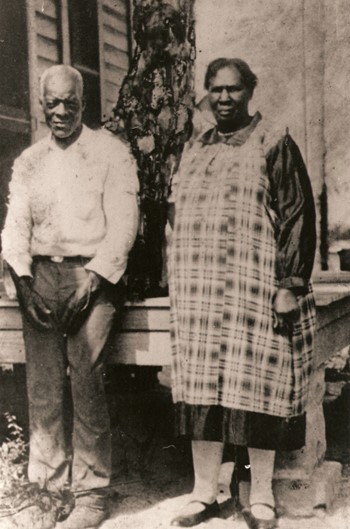
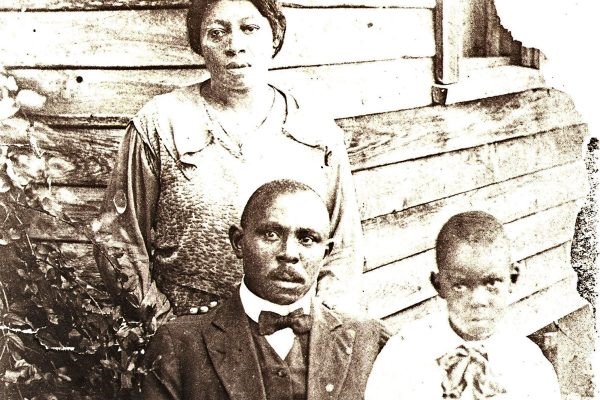
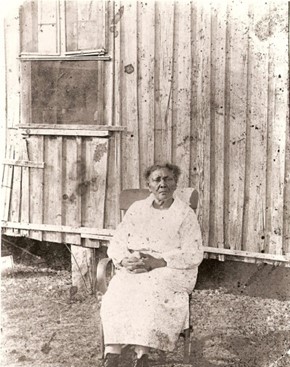
Only a few images remain of people who lived in Jonestown.
The 1870 U.S. Census lists 85 people living in Jonestown. There were 17 families and 13 people who were single or listed no family members. Almost half the population (41) were children or adolescents with no occupation listed.
The population of Jonestown peaked in the early 1900s. In 1904 there were 76 households, with 19 resident-owned homes. In 1925, Jonestown recorded 70 households. By 1951, the number had dropped to 11 households. The last resident, Mrs. Virginia Spellman, died in 1962.
Orange County Regional History Center
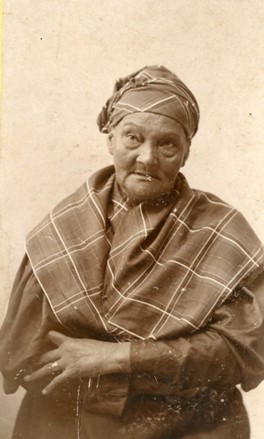
Orange County Regional History Center
Other Black settlements in the Orlando area included Sand (near Carver Court), Hooper Quarters (north of Central, named for white Rev. Andrew Hooper), Black Bottom (subject to flooding), Pepperhill (sometimes called Whildenville after the white builder, later Callahan), Ossie Quarters , and Parramore (built in 1880s by James B. Parramore, 14th mayor of Orlando).

Building Social and Religious Institutions
By the mid-1880s, residents of Jonestown were constructing buildings to house the social and religious institutions that signify the development of community: churches, schools, and fraternal organizations.
Churches
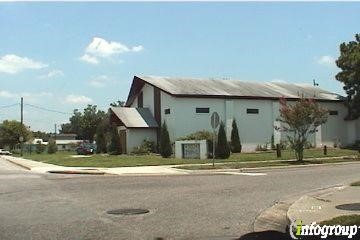
The role of religion in the lives of enslaved and emancipated African Americans cannot be underestimated. Religion brought hope and created supportive communities. Pastors of Black churches counseled their congregants and frequently acted as intermediaries between the Black and white communities. In 1886, Mt. Olive Colored [later Christian] Methodist Episcopal Church (CME) was constructed on East South Street, now at 745 Woods Avenue, Orlando. By 1904, a second church, Bethlehem Baptist Church on Quincy Street served the religious needs of Jonestown residents. Mt. Olive CME Church was still in Jonestown in 1951
Mt. Olive Colored Methodist Episcopal Church (CME) was founded in 1886 in the home of Ellen Paine (Payne). The first minister was Rev. M. Smith. He was followed by Rev. I.P. Purcell, Rev. A. D. Gorham, Rev. Henry Thoams Toy, and Rev. D.W. Browning. Rev. G. W. Washingon Sr., for whom the community of Washington Shores was named, came to Mt. Olive in 1927.
Schools
Throughout the era of slavery, enslaved people found ways to access education. Although teaching an enslaved person to read and write was prohibited by law in every state, slave narratives collected in the 1930s refer to individuals who could read and write and who educated others. The American Missionary Association and the Freedmen's Bureau record the desire for education expressed by African Americans post emancipation. Freedmen recognized that acquiring reading, writing, and math skills was essential to building economic independence and creating generational wealth. Children and adults attended schools organized by northern philanthropists and the Freedmens Bureau. In 1886, Jonestown residents opened the Orlando Colored School on Newman St. The principals for the first decade were P.T. Dodson (1886-87), S.A. Williams (1887-89), C. Jackson (1889-91), and J.T. Shuften (1891-94). The first teachers were Mrs. A.E. Viney (Assistant Principal), Mrs. N. L. Jackson, R. B. Bookins, and Mrs. O. M. Moore. The school was listed as late as 1925. No images of the school are available.
Creating a Civic Community
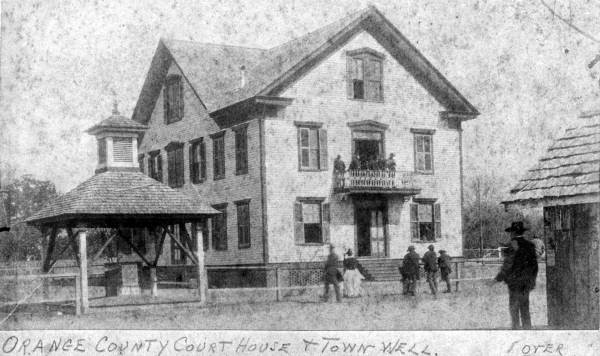
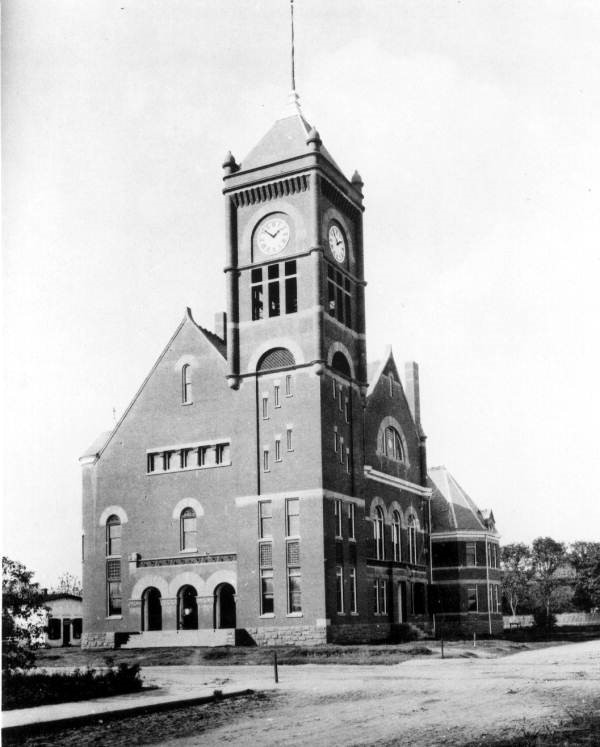
Florida returned to the Union in 1868, the same year the 14th Amendment was ratified defining citizenship. That same year, Black Orlandoans embraced their civic responsibilities and came to the courthouse to vote but were denied access to the ballot. In 1885, Florida added a poll tax to its constitution, a move that was widely recognized as a method of eliminating the Black vote. The list of Black electors (voters) from 1890 shows the linkage between Black businessmen and access to the ballot. [Link to voter list]
Black Entrepreneurship (1880 - 1920)
Black entrepreneurship emerged in Orlando as early as the 1880s and accelerated in size and scope over the following decades. The first business endeavors emerged from efforts to meet family needs. Black women "took in washing" from white families. They set up wash tubs in the back yard where they scrubbed the clothes on wash boards. They starched and ironed the clothes before returning them to their customers. Working at home, these women could also meet the needs of their family and avoid the conflicts that arose from work in a white home. Black families raised vegetables in home gardens and sold the surplus, an activity that sometime led to creation of a greengrocer stall or small store. Men with a mule and wagon might start a drayage business hauling various types of goods and materials for others. What often started as a front porch or back yard service to cut hair for family and friends expanded to become a barber shop or beauty salon. City records and oral histories document early entrepreneurship in Jonestown that follows this pattern.
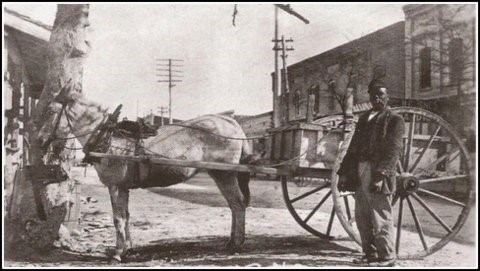
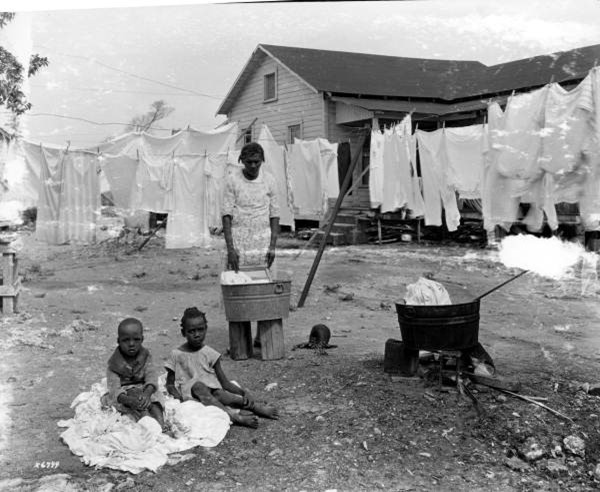
Florida Memory
The Decline of Jonestown
Black settlement in Orlando began in the Jonestown neighborhood, but it would not remain the location that defined Black life in the twentieth century. By the 1890s, white businessmen, including Orlando Mayor James B. Parramore, were constructing housing for Black workers in an area west of the Orlando business district. As the city's population grew, Jonestown became surrounded by white neighborhoods, racial tensions grew, and Blacks settled in what would later be called Parramore.
The end of Jonestown occurred in several steps. In 1904, Jonestown flooded. Although the city took measures to prevent future water issues, Jonestown did not grow as West Orlando did. By 1939, there were 76 Black homes (19 resident owned), 2 churches, and a grocery store in Jonestown. In 1939, a fire at the home of a family living on South Street precipitated the removal of Blacks from Jonestown. The city first granted a permit to the family to rebuild, but withdrew the permit when whites protested, citing poor conditions in the neighborhood. (Orlando Morning Sentinel, February 9, 1939, page 12).
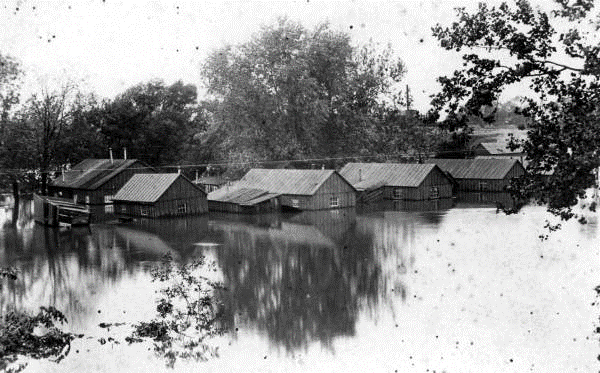
After the Jonestown flood, the city dug drainage wells to prevent future flooding, but many of the families who fled the rising waters did not return. By 1916, Jonestown residents were primarily renters rather than owners, with James Magruder and Jonestown resident Lawrence Burnett the primary landlords. By the mid-1920s, Jonestown had recovered most of its population.
The 1930s witnessed a new round of physical and social problems that led to the demise of the oldest Black neighborhood. The Great Depression produced the financial downfall of many small businessmen, including Chesley Magruder, the son of James Magruder. In 1935, in debt to the City of Orlando, he transferred 30 acres of Jonestown for the expansion of Greenwood Cemetery.
The eastward expansion of Orlando brought the new white subdivisions in close proximity to Jonestown and increased racial tensions that were voiced by whites in newspaper editorials. A letter in the January 17, 1937 issue of the Sunday Evening Star by a self-described "Northerner" complained, "...the [N]egroes pass by going to their homes owned by the white people. Why not have these [N]egroes move west or across the tracks where they belong?"
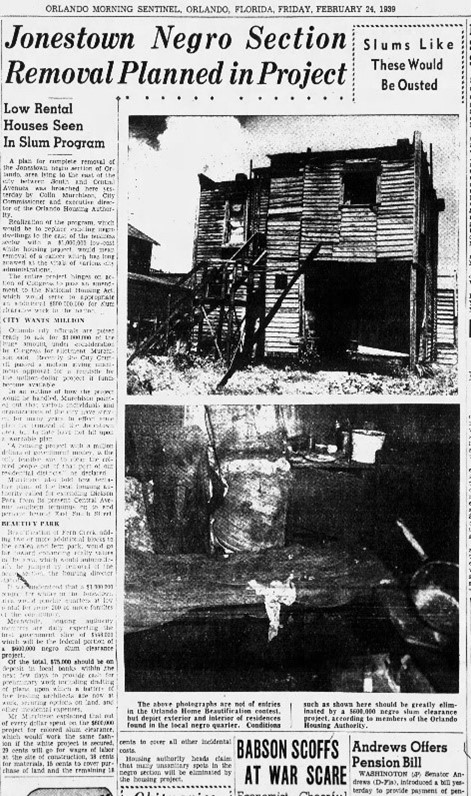
A fire at 1118 East South Street on November 19, 1938, precipitated the removal of most Jonestown residents by 1942. When the occupants of the home applied for a permit to rebuild, angry whites protested, and the permit was denied. On February 24, 1939, the Orlando Morning Sentinel headline read "Jonestown Negro Section Removal Planned in Project." Included were images of the burned house. Identifying the area of rental houses as a "slum," the article described the neighborhood a "a cancer which has long gnawed at the vitals of various city administrations."
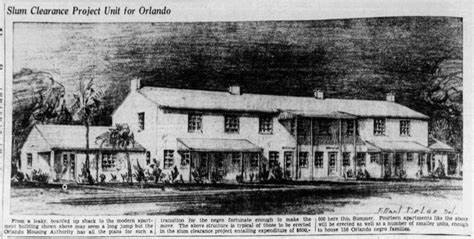
On October 15, 1939, a sinkhole appeared at the intersection of Quincy and East South Street in Jonestown. When the Griffin Park Public Housing Project opened in Parramore the following year, Orlando authorities encouraged Jonestown residents to relocate there. No Jonestown residents are recorded as living in the Griffin Park facilities. However, 48 "shacks, a small church, and a store" were destroyed to make way for phase one of Reeve's Terrace, a white public housing project that opened on South Street in 1942.
With the demise of Jonestown, the story of Black entrepreneurship shifts to West Orlando and the Parramore neighborhood.
Bibliography
Special thanks to Sarah Boye, a graduate student in the Department of History at the University of Central Florida, who shared her work on the Greenwood Cemetery Project.
Blackman, William Fremont History of Orange County, Florida: Narrative and Biographical (Deland: The E. O. Painter Printing Co., 1927), 431-2, Text Materials of Central Florida, accessed April 6, 2024, https://stars.library.ucf.edu/cfm-texts/110/
Lue, Martha Scott, These Stones: Pleasant Hill/Carter Tabernacle (United States: Serving This Generation, 2006)
Mosier, Tana Historic Orange County: The Story of Orlando and Orange County (Texas: Mahler Books, 2009).
Orlando City Directory 1891 (Orlando: The Daily Record Steam Press, 1891)
Procko, Melissa, "The Way we Were: Jonestown: Orlando's first Black community," The Community Paper, July 28, 2021, accessed April 6, 2024, https://www.yourcommunitypaper.com/articles/the-way-we-were-10/